
United Nations
3:25
United Nations 2017
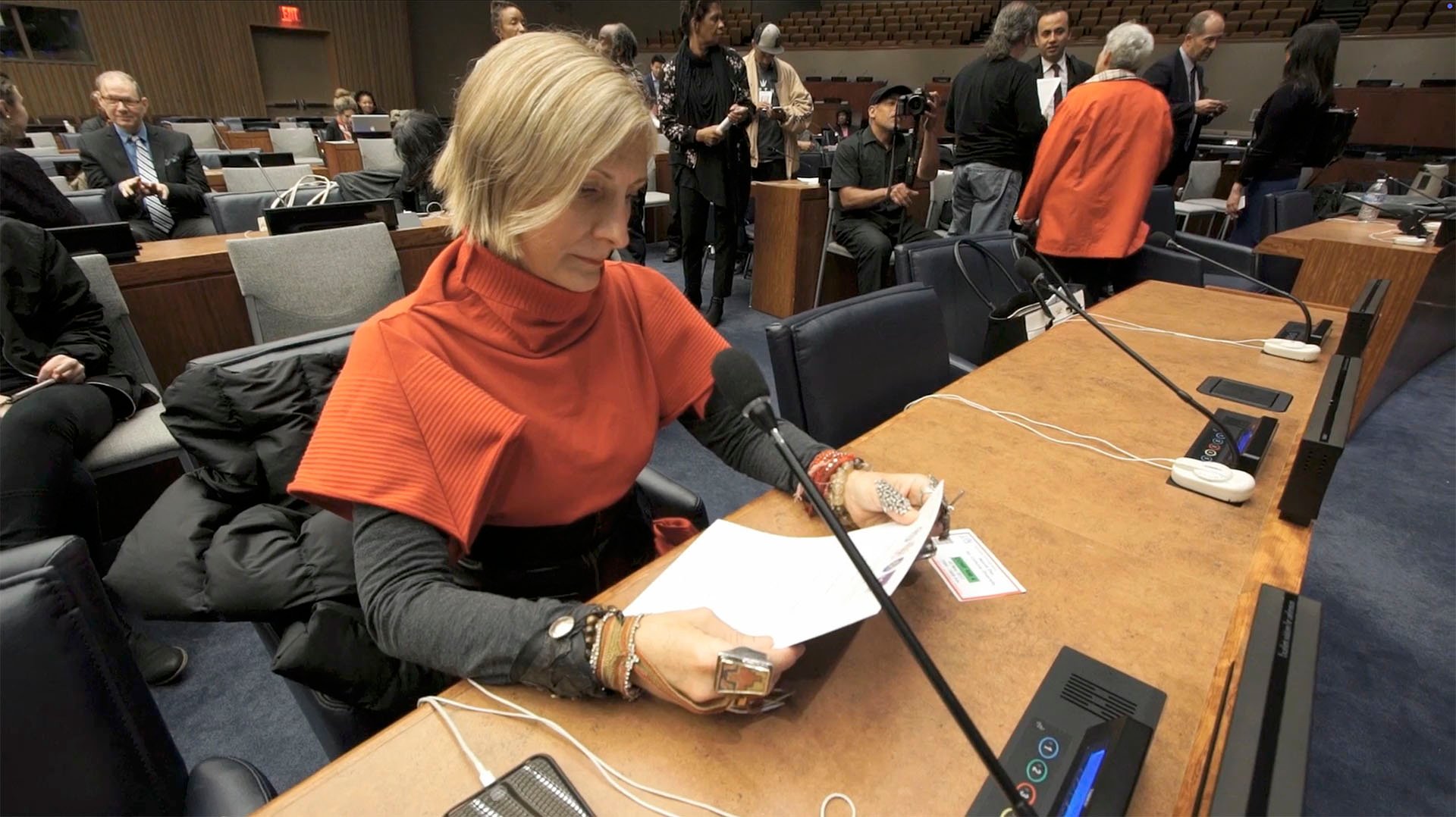
World Day for Cultural Diversity for Dialogue and Development Art and Science Panel
New York, United States
Organizer:
Gordon Tapper, Founder/Chairman of the Give Them A Hand Foundation
Moderator:
Dr. Judy Kuriansky
The United Nations (UN) is the world’s leading intergovernmental organization, fostering international cooperation and ensuring global peace and security. As the largest and most widely recognized international body, the UN is pivotal in maintaining international order, addressing global challenges, and uniting nations to work toward shared goals.
The UN tackles critical issues such as climate change, human rights, poverty alleviation, and cultural preservation through its various initiatives and programs. The UN strives to create a more equitable, sustainable, and peaceful world by promoting dialogue and collaboration among its member states. Artist Grimanesa Amorós recently participated in the UN’s Art and Science Panel to celebrate World Cultural Diversity Day. During the panel, Amorós highlighted the vital role of the arts in inspiring social change, fostering cultural understanding, and contributing to a more compassionate and connected world.
Amorós, known for her large-scale light installations and interdisciplinary works, shared insights into how art can bridge divides and spark meaningful dialogue. She emphasized the importance of integrating art and science to address global challenges, showcasing how creative expression can amplify scientific innovation and cultural preservation.
Amorós’s participation underscored the UN’s commitment to leveraging art as a tool for global diplomacy and social transformation. The Art and Science Panel demonstrated how interdisciplinary collaboration can lead to innovative solutions for pressing global issues by bringing together artists, scientists, and policymakers.
Through her work and advocacy, Amorós continues to inspire communities worldwide, using art to reflect cultural identity, address social issues, and promote unity. Her involvement in the UN’s initiatives highlights the transformative power of art in shaping a more inclusive and sustainable future.
(00:31) This is our section on arts and science. I’m very honored that we have Princess Nizreen El-Hashemite, who comes from Iraq. And her commitment certainly is towards culture and bringing neighboring countries together. So welcome.
(00:51) Thank you very much indeed for giving me the opportunity to be among you here and thank you very much indeed ma’am for the introduction. Well actually today is about cultural diversity and I have lots of culture, you know, being descendant of Prophet Muhammad of Islam all the way to be from Mecca to Iraq and the Arab countries, the Islamic countries and then to be in the Western world so I have all of this cultural diversity in me.
(01:19) The cultural diversity, yes it is under threat because of some policies and political leaders that they want us all to be the same without considering the differences between us and science like arts has a common language that we can all understand, that science and arts unites us.
(01:44) I heard the word light here. This is definitely a word that has inspired the work of our next presenter that you’re going to be very excited about. Grimanesa Amorós, Ms. Amorós, uses light to bring light to people through her art installation.
(02:10) – For this kind of introduction, it’s an honor to be here with Mr. Lin and Grace. And after hearing this great presentation, I’m here just to share with you my own personal story. Thank you, Gordon Tapper, for this wonderful opportunity to be here also this afternoon. As Judy has mentioned, I work with light. Since then, I started thinking ways about how could light, bring the light experience in that moment with others.
(02:36) Many years ago I had the opportunity to go to Lake Titicaca. I’m going to show you also a very short video in about a minute where you’re going to be peeking a little bit behind the scenes of what an artist has to go through.
(03:01) Its lighting sequences differ from each project, it’s being made on site, because for me it’s very important that the viewer becomes one with the piece and with the architecture that is surrounding the piece in that moment. So thank you very much.