
Parsons School of Art & Design
4:33
PARSONS School of Art, Media, and Technology 2017
Artist Talk
Grimanesa Amoros – Interdisciplinary Artist
Anna-Maria and Stephen Kellen Auditorium | NY, United States
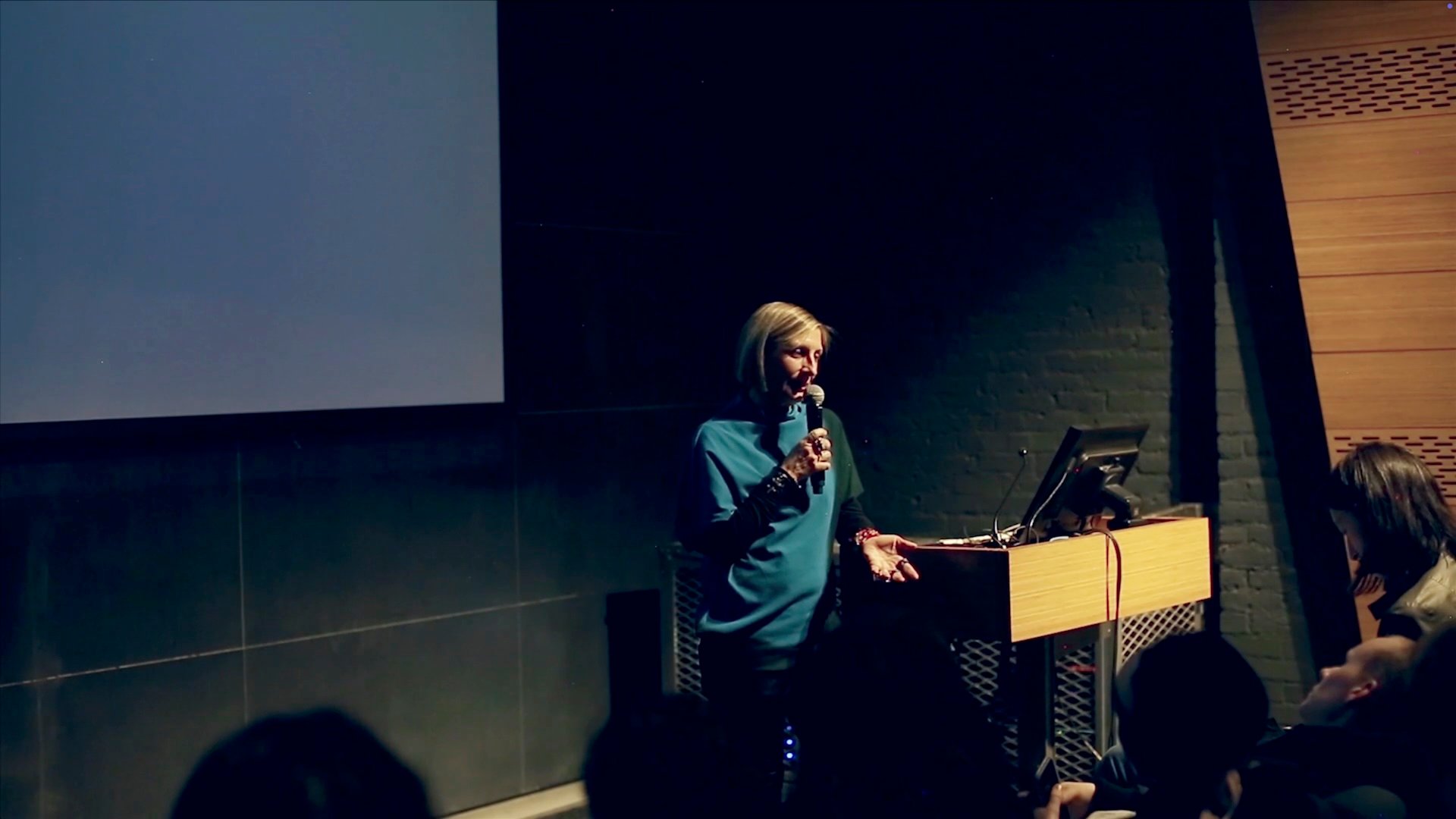
Grimanesa Amorós, an interdisciplinary artist with diverse interests in social history, scientific research, and critical theory, recently delivered a captivating visiting artist lecture. Through her art, Amorós conveys a sense of ephemeral wonder, often drawing inspiration from Peruvian cultural legacies. Her work—spanning sculpture, video, and large-scale light-based installations—explores themes of personal identity and community, illuminating the connections between individuals and their environments.
Amorós has exhibited her work globally, with installations and exhibitions in the United States, Europe, Asia, and Latin America. Her accolades include being a guest speaker at TEDGlobal 2014, a recipient of the NEA Visual Artist Fellowship, the NEA Artist Travel Grant, and participation in the U.S. Art in Embassies Program. Her lecture offered a deep dive into her creative process, showcasing how she blends art, technology, and cultural narratives to create transformative experiences.PARSONS School of Art, Media, and Technology (AMT) offers unparalleled training in art and design disciplines, pushing these fields beyond traditional boundaries through interdisciplinary collaboration and exchange. AMT fosters innovation by encouraging students to explore the intersections of art, technology, and media, preparing them to become leaders in creative industries.
The visiting artist lecture with Grimanesa Amorós is a testament to AMT’s commitment to bringing diverse perspectives and cutting-edge practices into the classroom. By engaging with visionary artists like Amorós, students gain invaluable insights into the evolving landscape of contemporary art and design.
PARSONS The School of Art, Media, and Technology (AMT) offers unparalleled training in the art and design disciplines, expanding these fields beyond their traditional boundaries through interdisciplinary collaboration and exchange.
(00:11) Her extraordinary journey from being coming from Peru, starting in life as a painter and then morphizing into this extraordinary artist who deals with site-specific installations and of such complexity that work with engineers, scientists, city councils and somehow retains the integrity of the work and I know that she’s really good at sharing that information with you.
(00:39) So I’m going to, with great pleasure, introduce Daria, our second year MFA student, who will introduce Grimanesa. Grimanesa Amoros has often drawn upon important Peruvian cultural legacies for inspiration for her large-scale light installations. With a round of applause, please welcome Grimanesa Amoros.
(01:06) Thank you, Simone and Daria, for the wonderful introduction. So I tried to select the examples with how do I work with public work, with foundations, with museums, with galleries, of course.
(01:21) These were amplified a lot of different possibilities that your work and your creativity does not have to live only on the white walls of a gallery. Then the Uros used to build their houses, their watchtowers and the islands itself. All the way to the northern part is this small village called Huanchaco.
(01:43) In 2000, I was in Iceland, it was an Aurora Borealis. Basically, you have to have a service of maintenance. You have to replace the bulbs and you have to replace the gels every four months. So as soon as I had the first opportunity, I went into working with LED, giving me the sensation of being squished. And then that’s what they named Breathless Maiden Lane.
(02:06) I make a simple drawing which just gave me an idea about how many lines I want to be filling the space and of course very important ingredient, you have to stay in budget. This is about 12 minute sequence. It could be opportunity to parallel a lotus flower.
(2:45) I’m just curious the intentionality that, like is there a form of communication with the audience, or a language, or how does it function in the work individually?
(02:53) When it’s not RGBs, I know that I’m more limited. I choose to work with only the warm whites and they are not that many. They’re about five different colors. I don’t have an idea of the lighting that I want to be doing prior my arrival and like composing music.
(03:14) Basically, that’s what I mentioned, it’s a romance with the unknown. The revealing of the process of your work and the extraordinary complexity in dealing with these enormous teams. And so I’m thinking if you could talk us through from that moment of when you’re sitting in the studio and you’re making the lines and you’re thinking about the site you’ve either been commissioned for or that you’ve found yourself.
(03:40) So from making the line to thinking about the way that your team will work with you to the kind of more complex issues of working with engineers and etcetera to make the final work. I love to collaborate with engineers. You know, they make things, they solidify your ideas. In my case, it comes very naturally and I think that was my life growing up.
(04:04) I think that it’s important to find our essence and our individuality of who we are. I always have three words that have helped me throughout my career a lot, which is LPP, love, passion, and perseverance. So I think that they’re very important for all of us in any career that we could be. Thank you so much.